
Understanding Obesity
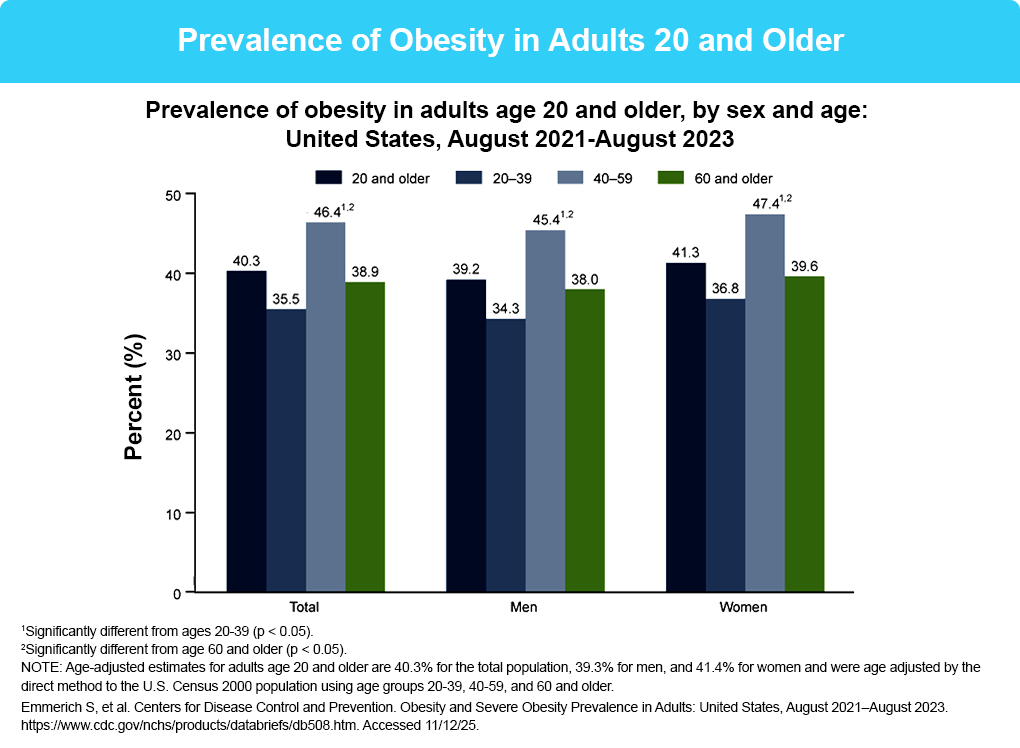
Obesity was declared a major public health problem and global epidemic by the World Health Organization (WHO) in 1997.1 It is defined as having a body mass index (BMI) of ≥ 30 kg/m². In the U.S., 1 in 5 children and 2 in 5 adults are living with obesity. Obesity increases the risk of several conditions, such as hypertension, type 2 diabetes, stroke, and certain cancers.2
Data from 2021–2023 show:2
- 40.3% of adults in the U.S. are living with obesity, with no significant differences between men and women
- 9.4% of adults are living with severe obesity (BMI ≥ 40 kg/m²); severe obesity is more common in women than men
- Comparing 2013–2014 to 2021–2023, the prevalence of obesity did not change significantly; however, severe obesity increased from 7.7% to 9.7%
Obesity and Inflammation
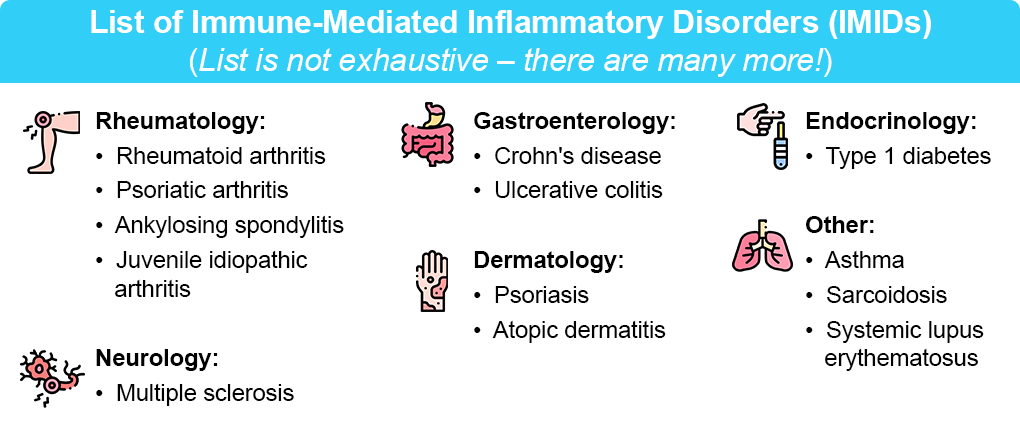
Obesity causes or worsens over 200 medical disorders, including immune-mediated inflammatory diseases (IMIDs). These are a group of inflammatory disorders, including psoriasis, psoriatic arthritis, and inflammatory bowel disease.3,4,5 Since obesity is linked to inflammation as well, it is intertwined with these IMIDs. Treatment of obesity is thus important in the overall management of IMIDs.
References:
- Haththotuwa RN, et al. Obes Obstet. 2020:3-8.
- Emmerich SD, et al. NCHS Data Brief. 2024 Sep:(508).
- Barros G, et al. Int J Mol Sci. 2022;23:7499.
- Gregg EW, Shaw JE. N Engl J Med. 2017;377:80-81.
- Singh S, et al. Nat Rev Gastroenterol Hepatol. 2017;14:110-121.